
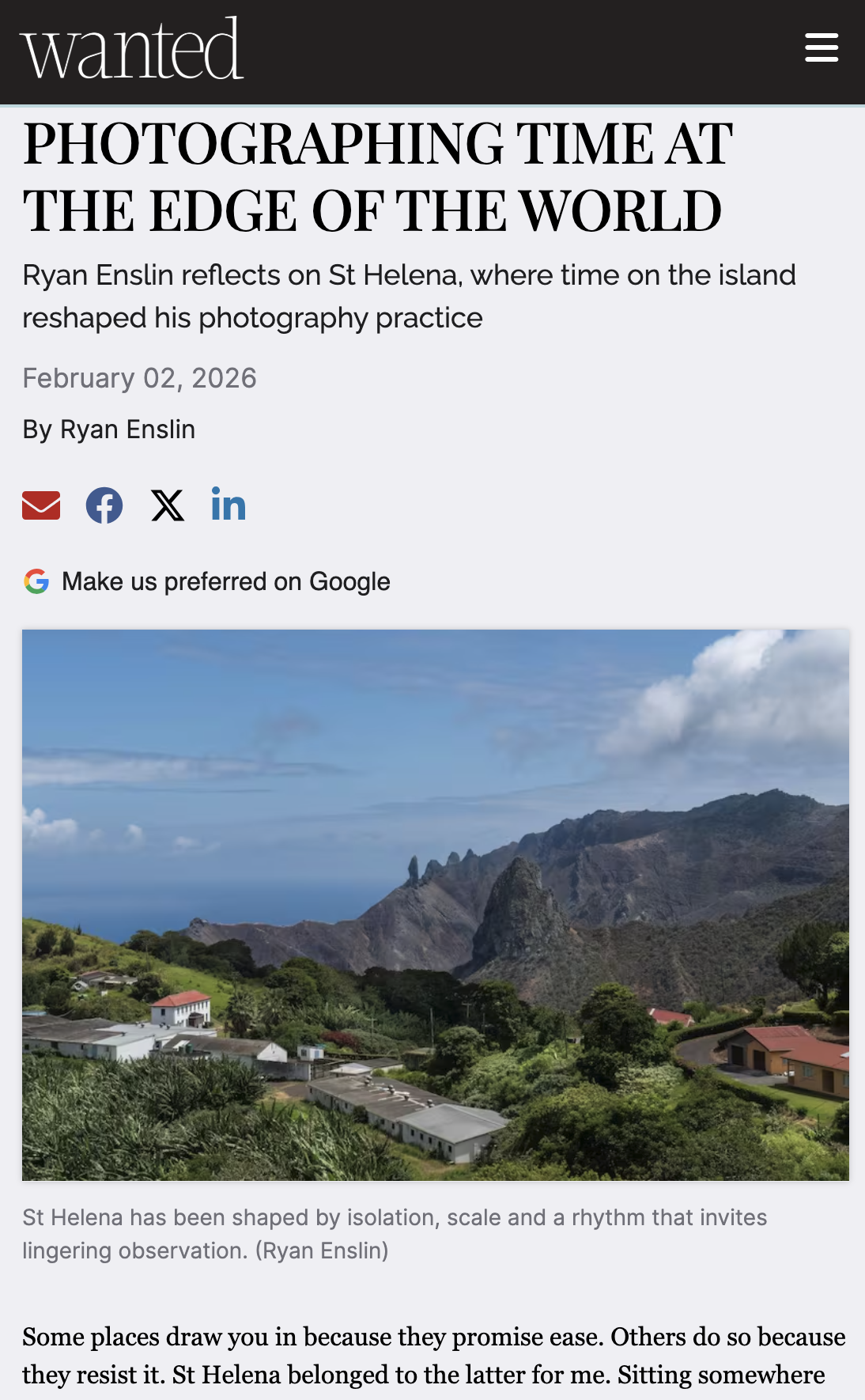
Photographing Time at the Edge of the World
Ryan Enslin reflects on St Helena, where time on the island reshaped his photography practice.
Some places draw you in because they promise ease. Others do so because they resist it. St Helena Island belonged to the latter for me. Sitting somewhere halfway between South America and Africa, this isolated volcanic outcrop exists beyond the habitual routes of travel. Long before I arrived, I was drawn to what it means for a place to be shaped not by access, but by separation. By distance itself.
St Helena is one of those rare places whose remoteness has never been incidental. It has been central to its story. Napoleon’s final exile. Boer prisoners of war. A banished Zulu king. The island has repeatedly entered world history by circumstance. And yet, what struck me most was how quietly this history lives on. It does not dominate daily life or ask to be foregrounded. It sits alongside it, absorbed into the present, allowing the island to remain grounded and unhurried.
The Island’s Tempo
Arriving confirmed what I had sensed from afar. St Helena does not rush to meet you. Roads curve according to landscape rather than logic. Conversations unfold without urgency. Light behaves slowly, deliberately. You learn quickly that the island will not bend to your expectations. Instead, she asks you to recalibrate to her rhythm.


